
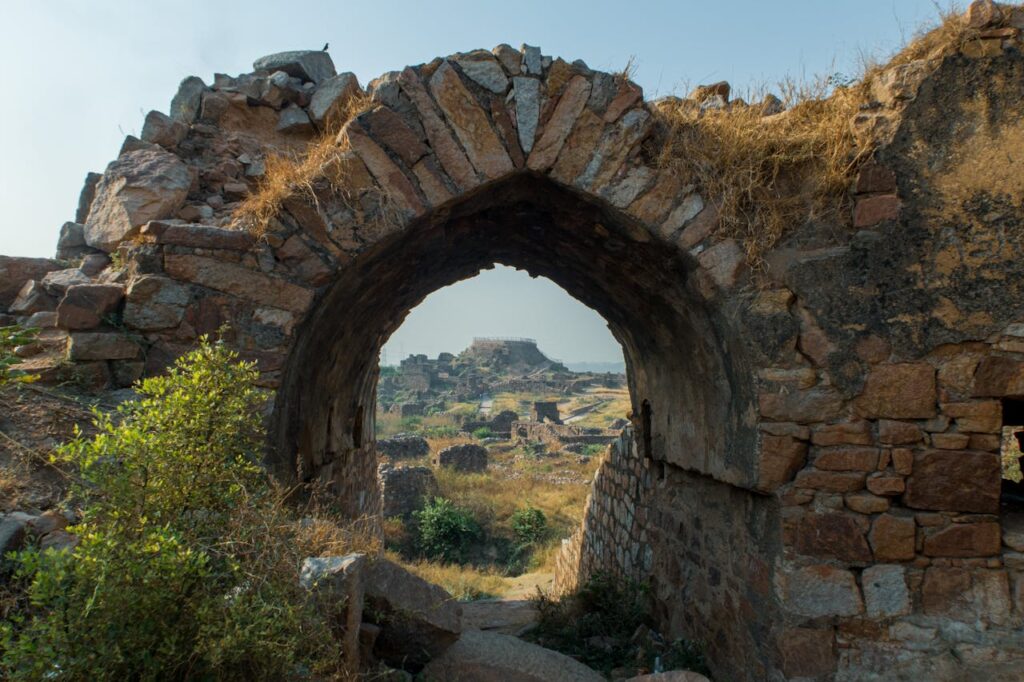
India is, without doubt, a land of living contradictions. As a country where 1.4 billion people actively jostle for space in sprawling megacities, it simultaneously hides within its vast folds entire settlements that fell completely silent centuries ago. Furthermore, it shelters towns that the desert sand swallowed whole, valleys that emptied overnight without warning, and hilltop fortresses that actively echo with stories no one fully understands even today. Moreover, these deeply haunted places do not merely sit quietly in the pages of history books. Instead, they actively breathe, whisper, and pull curious travellers into mysteries that mainstream tourism consistently overlooks and ignores.
With The Safar Travels, step into places where time stopped, and history never left
1. Kuldhara, Rajasthan: The Village That Vanished in a Single Night
Distance from Jaisalmer: 18 km | Best time to visit: October to March
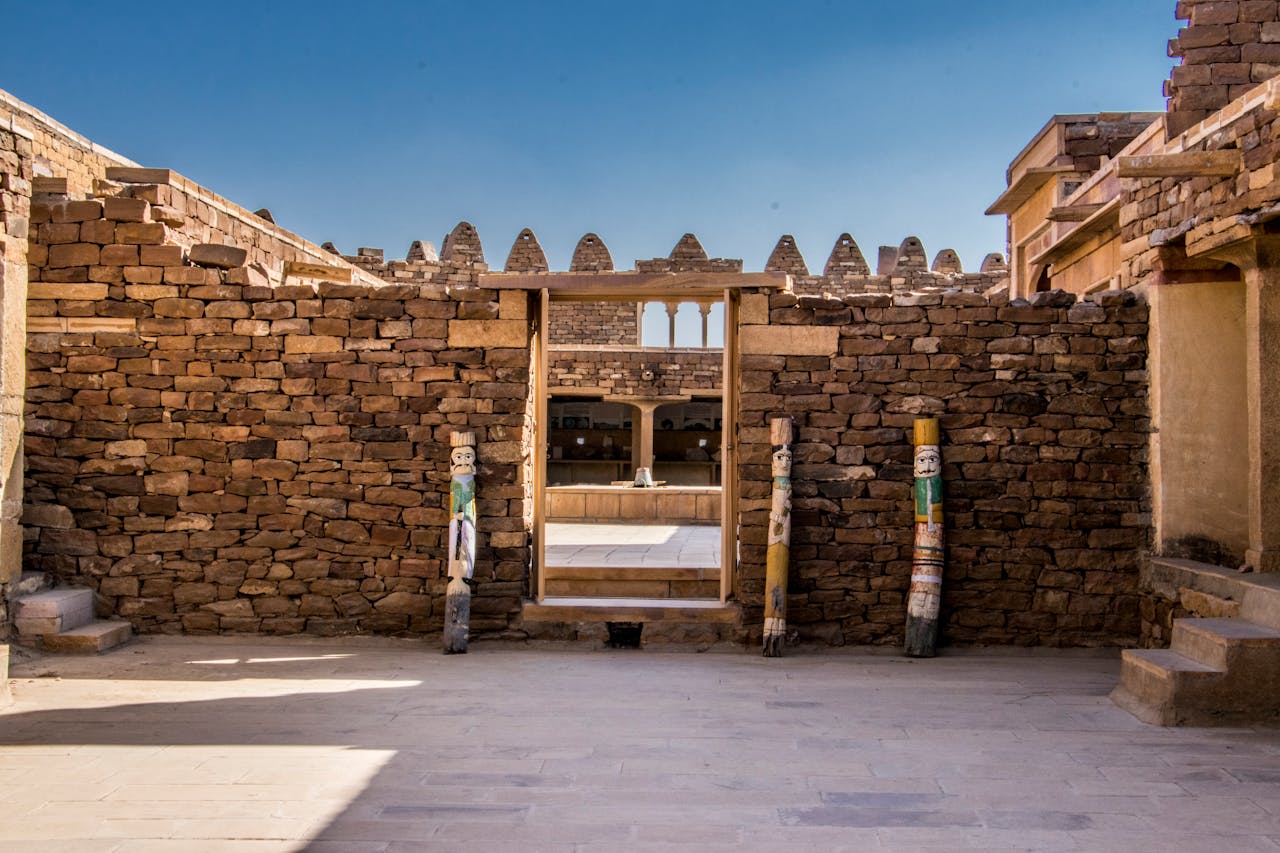
If there is one abandoned settlement that has captured India’s collective imagination more than any other, it is Kuldhara. In 1825, nearly 1,500 Paliwal Brahmin families, who had inhabited this prosperous village for over 500 years, vanished in a single night. leaving no trace behind, just the curse so potent locals say it still holds.
The story goes that the tyrannical minister of the local ruler, Salim Singh, had become obsessed with the village headman’s daughter and threatened to take her by force if she was not handed over. Rather than submit to this humiliation, the entire Paliwal community made a silent, coordinated decision. They gathered under the cover of darkness, abandoned every possession, and disappeared, leaving behind a curse that no one would ever be able to settle or prosper on this land again. To this day, no one has successfully lived in Kuldhara. Families who have attempted it reportedly leave within days, citing inexplicable sounds, sensations, and unease.
-What you’ll find there: Stone houses preserved in eerie mid-use states, a crumbling Shiva temple, narrow winding lanes still perfectly laid out in the Paliwal urban planning style, and an information board that raises more questions than it answers. The Archaeological Survey of India has partially restored the site.
-Practical notes: Entry fee applies. The site is open daily and is best visited at dawn when the light turns the sandstone gold and the crowds are thin. Night visits are occasionally organized by local operators, genuinely atmospheric, though not for the faint-hearted. One can pair this with Jaisalmer’s fort and the sand dunes for a three-day Rajasthan package.
2. Dhanushkodi, Tamil Nadu: The Town the Cyclone Erased
Distance from Rameswaram: 20 km | Best time to visit: November to February
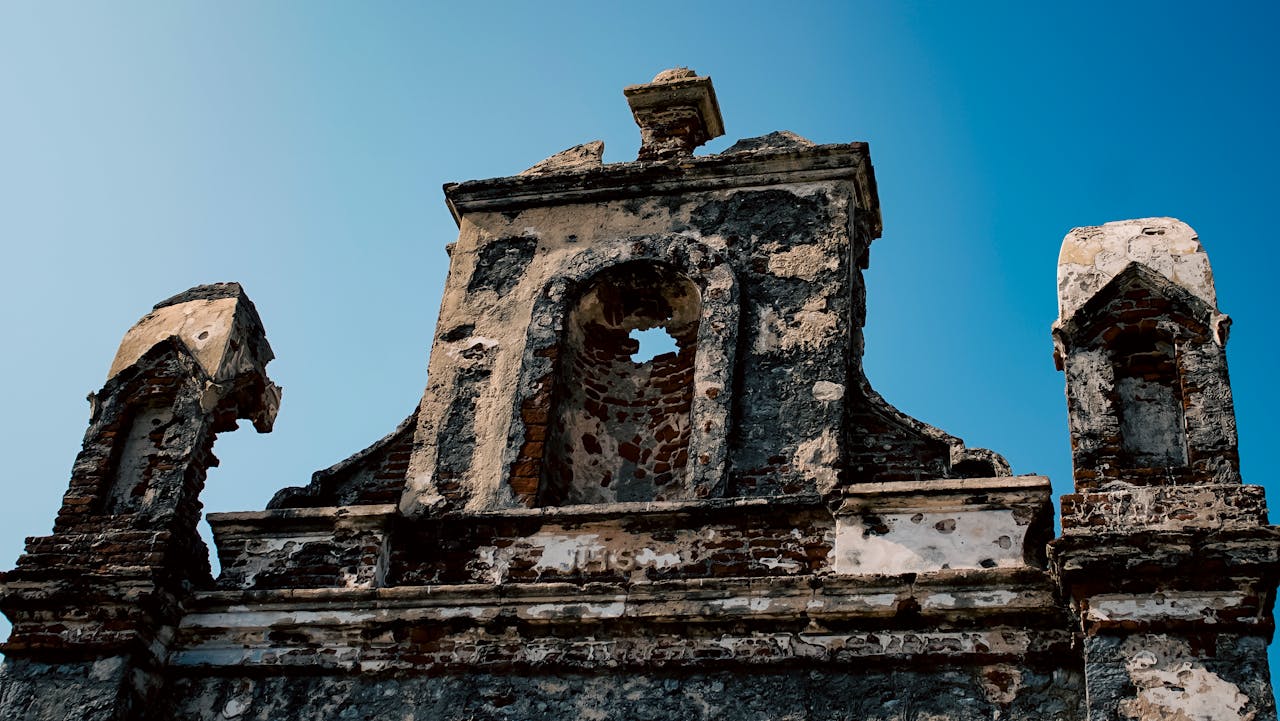
In 1964, a Category 5 cyclone made landfall with a fury that meteorologists still reference. When it passed, the thriving town of Dhanushkodi, once a busy port and railway junction connecting India to Ceylon (now Sri Lanka), had been reduced to rubble. Over 1,800 lives were lost. The government declared the town unfit for habitation, and it has stayed that way ever since.
What makes Dhanushkodi extraordinary is its geography. It sits at the very tip of Pamban Island, the land tapering to a narrow spit where the Bay of Bengal meets the Indian Ocean. On clear days, you can see Sri Lanka’s shores from the beach. The ruins of the railway station, post office, church, and residential quarters stand in various stages of collapse, reclaimed incrementally by the sea. Fishermen still come here, and a small number of families live in basic dwellings nearby, but the town itself remains officially abandoned.
–What you’ll find there: The skeletal railway station platform where trains once arrived from mainland India, the remains of a church whose walls have become a canvas for the wind, the hull of a passenger ferry that never made another crossing, and one of the most isolated beaches in peninsular India.
–Practical notes: The road to Dhanushkodi is rough, a sandy track passable by SUVs and shared jeeps that locals operate as shuttle services from Rameswaram. Go early. The afternoon heat is punishing, and the track can flood during high tide. Combine with the Rameswaram temple and Pamban Bridge for a full Tamil Nadu coastal journey. No formal entry fee, but carry water, sunscreen, and more camera memory than you think you’ll need.
3. Mohenjo-daro’s Indian Cousin: Lothal, Gujarat
Distance from Ahmedabad: 80 km | Best time to visit: October to March
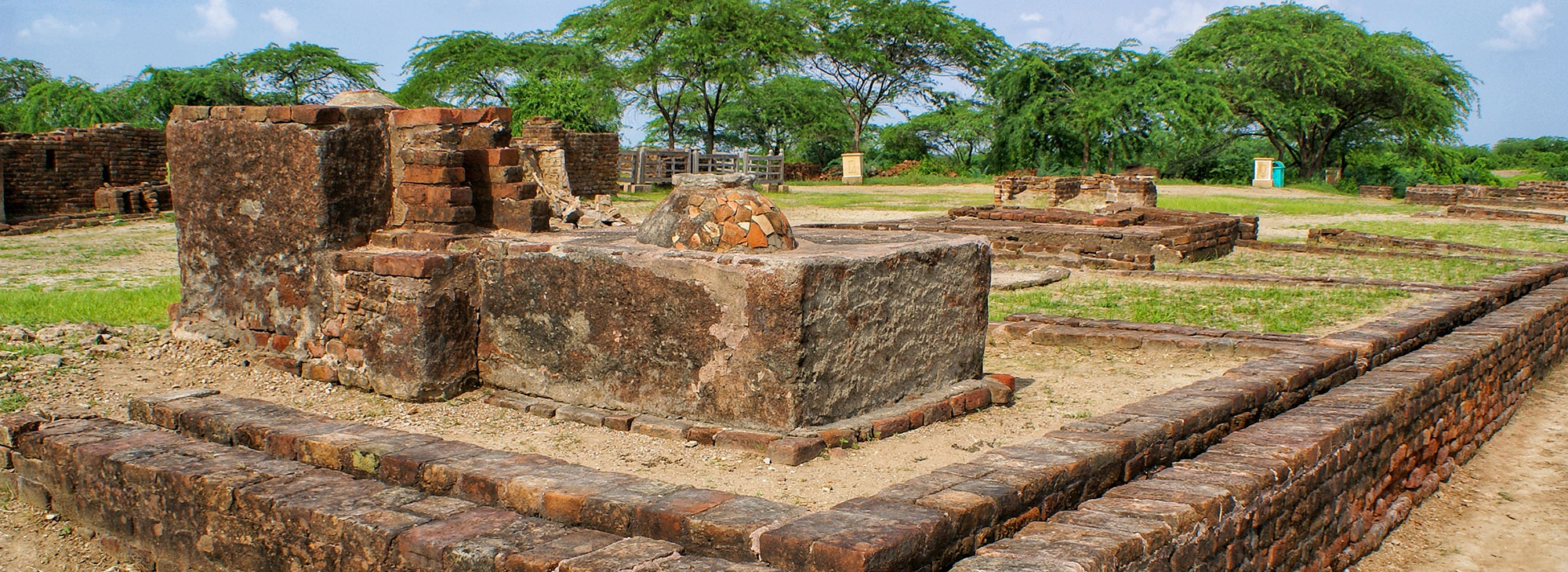
While Mohenjo-daro sits across the border in Pakistan, India has its own extraordinary window into the Indus Valley Civilization, and most travelers walk right past it.
Lothal, located in Gujarat’s Bhal region, was a sophisticated port city that thrived between 2400 and 1900 BCE. Think about that for a moment: nearly 4,400 years ago, the people who lived here had a planned drainage system, a standardized system of weights and measures, a dockyard considered the world’s earliest, and bead factories whose products have been found as far away as Mesopotamia. They were, by every measurable standard, more administratively organized than many modern cities.
Then, around 1900 BCE, the civilization declined. Scholars debate whether it was climate change, shifting river courses, or something else entirely. The people who built Lothal simply moved on or didn’t survive. The record goes quiet.
-What you’ll find there: The excavated remains of the dockyard, residential quarters, a marketplace, and a remarkable site museum that houses pottery, jewelry, seals, and tools recovered from the earth.
-Practical notes: Managed by the Archaeological Survey of India. Modest entry fee. Plan at least three to four hours. Hiring a local guide elevates the experience; the difference between walking through rubble and understanding what you’re looking at is entirely in the telling. Combine with Ahmedabad’s UNESCO-listed old city, Rani ki Vav stepwell in Patan, and the Rann of Kutch for an extraordinary Gujarat heritage circuit.
4. Bhangarh, Rajasthan: India’s Most Officially Haunted Place
Distance from Jaipur: 83 km | Best time to visit: October to February
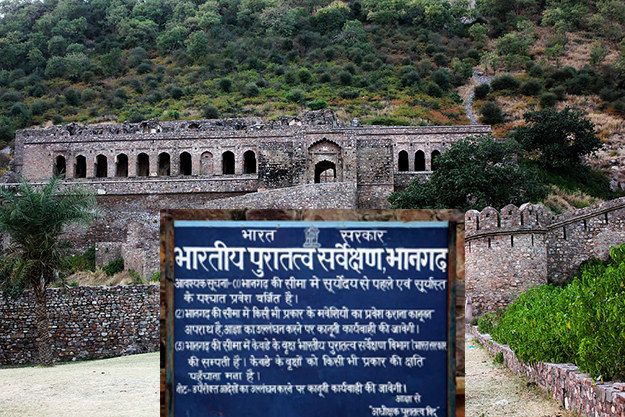
The Archaeological Survey of India, a serious, bureaucratic government body not given to dramatics, has posted a notice at the entrance of Bhangarh Fort. It reads, more or less: entry before sunrise and after sunset is strictly prohibited. That sign alone draws hundreds of visitors.
Founded in 1573 by Bhagwant Das for his son Madho Singh, Bhangarh was a thriving town of 10,000 people, temples, markets, palaces, and havelis spreading across the valley. By the early 18th century, it was empty. No signs of war, no plague recorded with certainty, no conqueror who razed it, just emptied.
The most popular legend involves a sorcerer named Singhia who fell in love with the beautiful Princess Ratnavati. When she rejected his advances and he attempted to use black magic on her, his spell was turned against him. With his dying curse, he condemned the town and all who lived in it. The entire population perished, some say within a year. Whether you believe the curse or not, the atmosphere of Bhangarh is genuinely unsettling in ways that are difficult to explain. The ruins are extensive, the temples are partially intact, and the forest presses in on all sides. Birds fall notably silent in certain sections. Shadows fall in unexpected directions. Or perhaps that’s just what you tell yourself afterward.
-What you’ll find there: The grand entrance gates immediately command attention as you walk in, while several Hindu temples, most notably the remarkably well-preserved Gopinath temple, simultaneously draw you deeper into the heart of the site. Furthermore, the striking ruins of the palace complex and the ancient market street actively tell the story of a civilisation that once thrived with extraordinary energy and purpose. Moreover, as you move further inward, a breathtaking panorama across the valley ultimately reveals, above all, exactly why the founders so deliberately and wisely chose this precise location to build an entire town worth remembering forever.
-Practical notes: Entry fee applies. Open only during daylight hours, the ASI signs are enforced. Located within the Sariska Tiger Reserve buffer zone, you may spot wildlife on the approach road. Combine with the Sariska reserve and Alwar for a weekend trip from Delhi or Jaipur.
5. Champaner, Gujarat: The Forgotten Capital
Distance from Vadodara: 47 km | Best time to visit: November to February
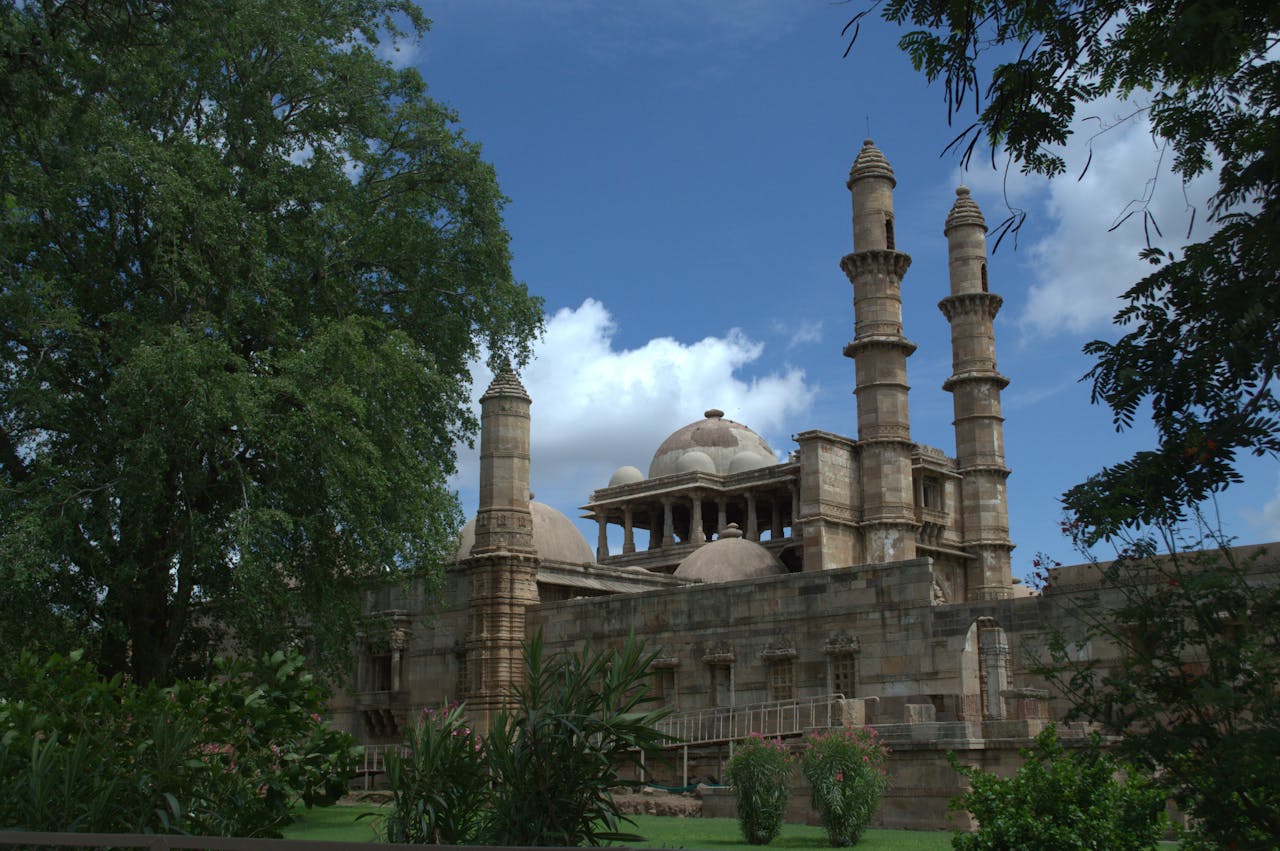
In 1484, Sultan Mahmud Begada of Gujarat captured the Hindu hill fort of Champaner from the Khichi Chauhans after a 23-month siege. He then did something remarkable: he decided to build his new capital here, from scratch, and for the next 23 years poured every resource of his kingdom into making it magnificent. He built mosques of such architectural sophistication that UNESCO eventually designated the entire area a World Heritage Site. The Jama Masjid of Champaner in particular is one of the finest examples of pre-Mughal Islamic architecture in India. Its stone lattice screens, soaring minarets, and exquisitely carved interiors are breathtaking.
Then Humayun captured Champaner in 1535. The capital shifted. The city was abandoned gradually. Gujarat’s political center moved to Ahmedabad. Pavagadh hill’s forest swallowed Champaner, with its extraordinary monuments.
-What you’ll find there: Eight mosques, several step-wells, fortification walls, and the Pavagadh hill with its ancient Kalika Mata temple at the summit (accessible by ropeway and trekking trail). The juxtaposition of a medieval Islamic planned city against a much older Hindu sacred site on the hill above it is historically fascinating and visually stunning.
-Practical notes: UNESCO World Heritage Site. Entry fee applies. Wear comfortable shoes; the site covers significant ground, and the terrain is uneven. The ropeway to Pavagadh gets crowded on weekends. Best explored over a full day. Combine with Vadodara’s Laxmi Vilas Palace and Baroda Museum for a strong heritage weekend.
6. Vijayanagara / Hampi, Karnataka: The Empire That Burned
Distance from Bangalore: 350 km | Best time to visit: October to February
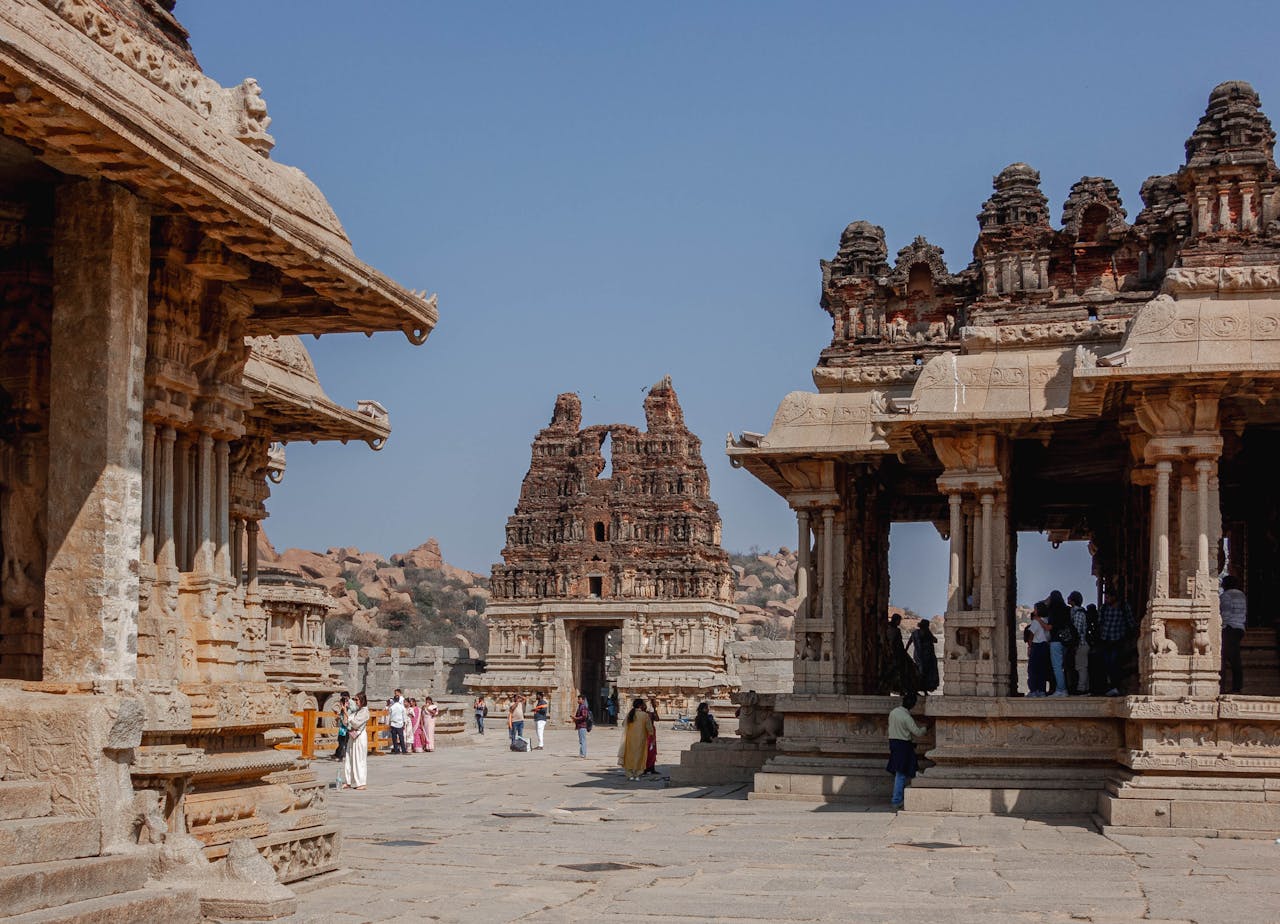
At its peak in the 15th and early 16th centuries, Vijayanagara was one of the largest cities on earth. Persian and Portuguese merchants who visited wrote with genuine astonishment about its markets overflowing with precious stones sold by weight, its wide avenues, its temples so large they seemed to challenge the sky, and its population of perhaps 500,000 people.
Then in 1565, the Vijayanagara army was defeated at the Battle of Talikota by the Deccan Sultanates. The victorious armies entered the city and burned it for six months. Six months. When they finally left, one of the greatest cities in the medieval world was a ruin. Most of it has never been rebuilt.
What remains, now known as Hampi, is a UNESCO World Heritage Site spread across 4,100 hectares of extraordinary boulder-strewn landscape. The Virupaksha temple still sees active worship. The Vittala temple’s stone chariot is among the most photographed monuments in India. The Queen’s Bath, the elephant stables, the Lotus Mahal, each structure tells a fragment of a story that, taken together, is almost too large to absorb.
-What you’ll find there: Arguably the most spectacular archaeological landscape in India. Hampi is not a quiet, forgotten ruin — it has a thriving traveler culture, guesthouses, cafes, and guided tours. But the scale of what was lost here, and the beauty of what remains, makes it essential.
-Practical notes: Plan a minimum of two full days; three is better. A licensed guide is highly recommended for historical context. The Tungabhadra River running through the site adds to the atmosphere. Stay in Hampi village for the experience, or stay in Hospet for more comfortable accommodation options.
7. Garh Kundar, Madhya Pradesh: The Fort of Disappearances
Distance from Jhansi: 75 km | Best time to visit: October to March
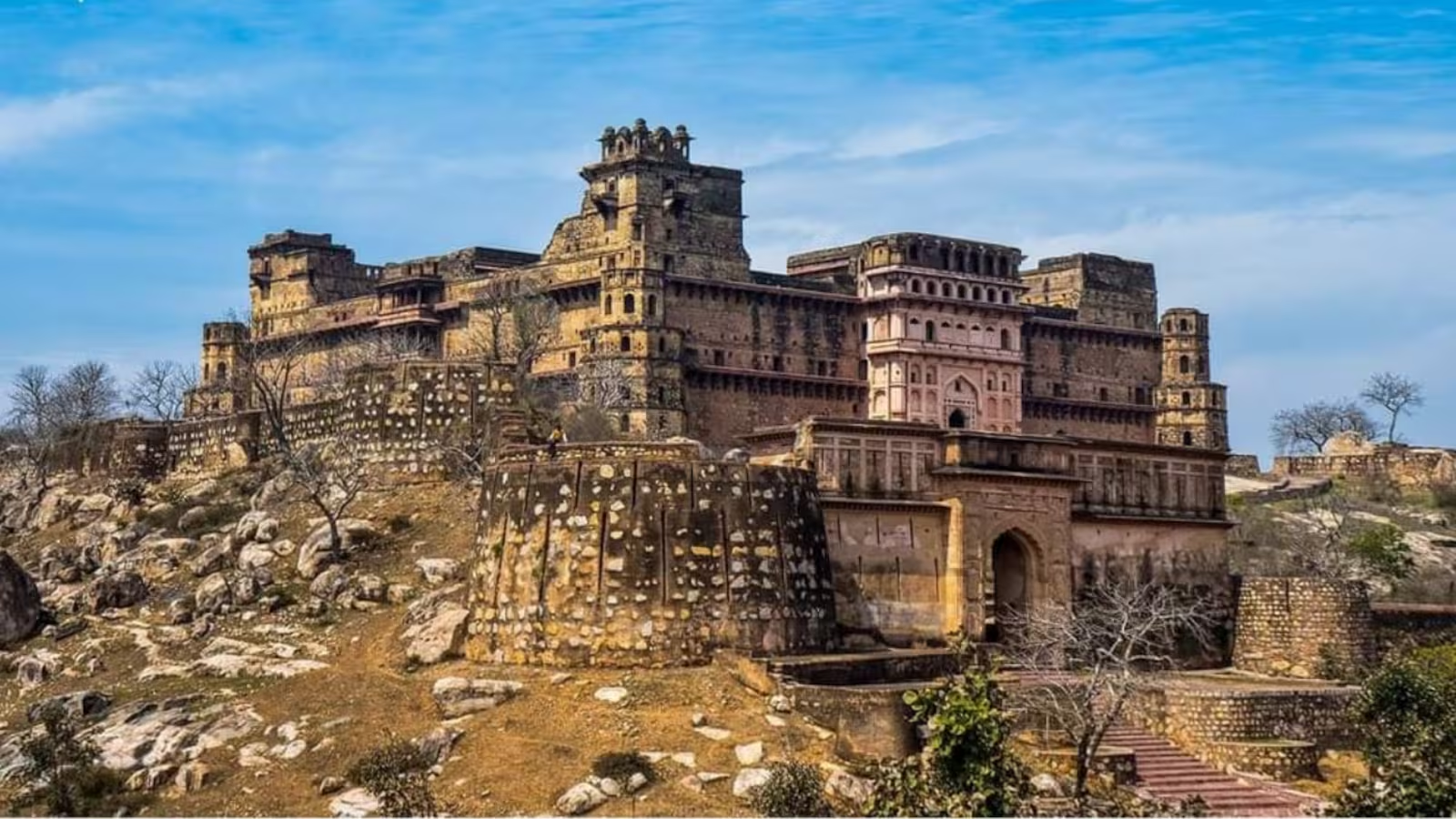
If Bhangarh is India’s officially haunted place, Garh Kundar is its less-famous but arguably more disturbing cousin.
The Chandela rulers originally established this 10th-century fort in Madhya Pradesh’s Niwari district, after which the Khangar and Bundela dynasties successively took control of it, before time and neglect consequently drove it into complete abandonment. The fort itself is an architectural marvel, a multi-storied structure built into a hillside with interconnected chambers, an intricate water harvesting system, and passages that seem to go nowhere.
A deeply chilling local legend consequently gives Garh Kundar its dark and unsettling reputation, and it centres, above all, around a Bundela wedding procession that history never fully explained. According to the legend, an entire baraat, comprising hundreds of people, horses, musicians, and jubilant celebrants, confidently entered the fort in a moment of celebration. However, after crossing its ancient threshold, not a single soul ever walked back out. Furthermore, the procession left absolutely no trace behind, no footprints, no belongings, no explanation, and, most disturbingly, no bodies. As a result, the fort continues to actively haunt the imagination of every traveller and historian who dares to seek answers that, ultimately, nobody has ever found.
-What you’ll find there: A largely unrestored and genuinely atmospheric fort complex, underground chambers with depth never fully mapped, old temples within the compound, and an almost complete absence of tourist infrastructure, which means you experience it with a rawness that more popular sites have lost.
-Practical notes: This is genuinely off the beaten path. There is minimal signage and almost no official visitor infrastructure. Go with a local guide from Jhansi or Orchha. Combine with the extraordinary temples at Khajuraho and the historic town of Orchha for one of Madhya Pradesh’s richest heritage itineraries.
Why These Places Should Be on Your Travel List
The well-worn argument for heritage tourism is historical and educational. And yes, visiting Lothal connects you to a civilization older than Rome, and walking through Hampi’s ruins gives you the humbling sensation of standing inside a history book.
But that’s not really why these places pull at people.
Mystery is one of the rarest experiences in an age of hyperconnectivity. We can access virtually any piece of information in seconds. We can satellite-map every mountain range and ocean floor. And yet these places, these villages and cities and forts, hold questions that no one answered. They have atmospheres that resist explanation. They have silences that feel inhabited.
Essential Travel Information
1. Best Time to Visit: The overwhelming majority of these sites are in North and West India, where October through March is ideal, with cool days, clear skies, and manageable crowds. From November through January is the best time to visit Tamil Nadu sites like Dhanushkodi. Karnataka’s Hampi is comfortable from October through February. Avoid all outdoor heritage sites during the Indian summer (April–June), when temperatures routinely exceed 40°C.
2. Getting Around: Most of these sites are not on major rail or air routes. A private car with a driver is the most practical and comfortable option for covering multiple sites, particularly in Rajasthan, Gujarat, and Madhya Pradesh. For Hampi, flying into Hubli or Bangalore and taking a cab is the most practical approach. For Dhanushkodi, fly into Madurai or Trichy and travel by road to Rameswaram.
3. Photography: All ASI-managed sites permit personal photography without charge. Some sites charge a small camera fee. One needs separate ASI permission in advance for drone photography; obtain this through your tour operator well before travel. Early morning light is universally superior at all these sites.
4. Safety & Etiquette: These are archaeological sites, not adventure playgrounds. Do not climb on or touch the ruins beyond designated areas. It is illegal to remove any stone, fragment, or artifact. These are protected monuments. Dress modestly, particularly at sites with active temples. Engage local guides: they support the communities nearest to these sites, and their knowledge transforms the experience.
5. Guided vs. Independent Travel: Independent travel to most of these sites is entirely possible for experienced travelers. However, the difference a good local guide makes at a site like Lothal or Garh Kundar, where the ruins themselves communicate little without context, is profound. We strongly recommend guided experiences for first-time visitors to India’s heritage sites.
Plan Your Journey With Us
The abandoned villages and lost civilizations of India reward the traveler who arrives prepared, who knows which ruins to linger at, which local legends to ask about, where to stay within striking distance without sacrificing comfort, and how to combine these sites into a journey that builds rather than scatters.
We build custom heritage itineraries across Rajasthan, Gujarat, Karnataka, Tamil Nadu, and Madhya Pradesh, individually designed around your travel dates, interests, pace, and budget. Every itinerary includes vetted accommodation, private transport, and licensed local guides at each significant site.
Whether you want a weekend drive from Delhi to Bhangarh and Kuldhara, a ten-day Gujarat deep-dive from Lothal to Champaner, or a grand southern circuit through Hampi and Dhanushkodi, we handle the research, the logistics, and the details, so you can arrive and be present.
Get in touch with our heritage travel specialists to start planning your journey into India’s forgotten worlds.
All entry fees mentioned are subject to change. Archaeological Survey of India regulations apply to all centrally protected monuments. Travel during local and national festival periods may affect access to certain sites.
Subscribe for more such interesting stories,

